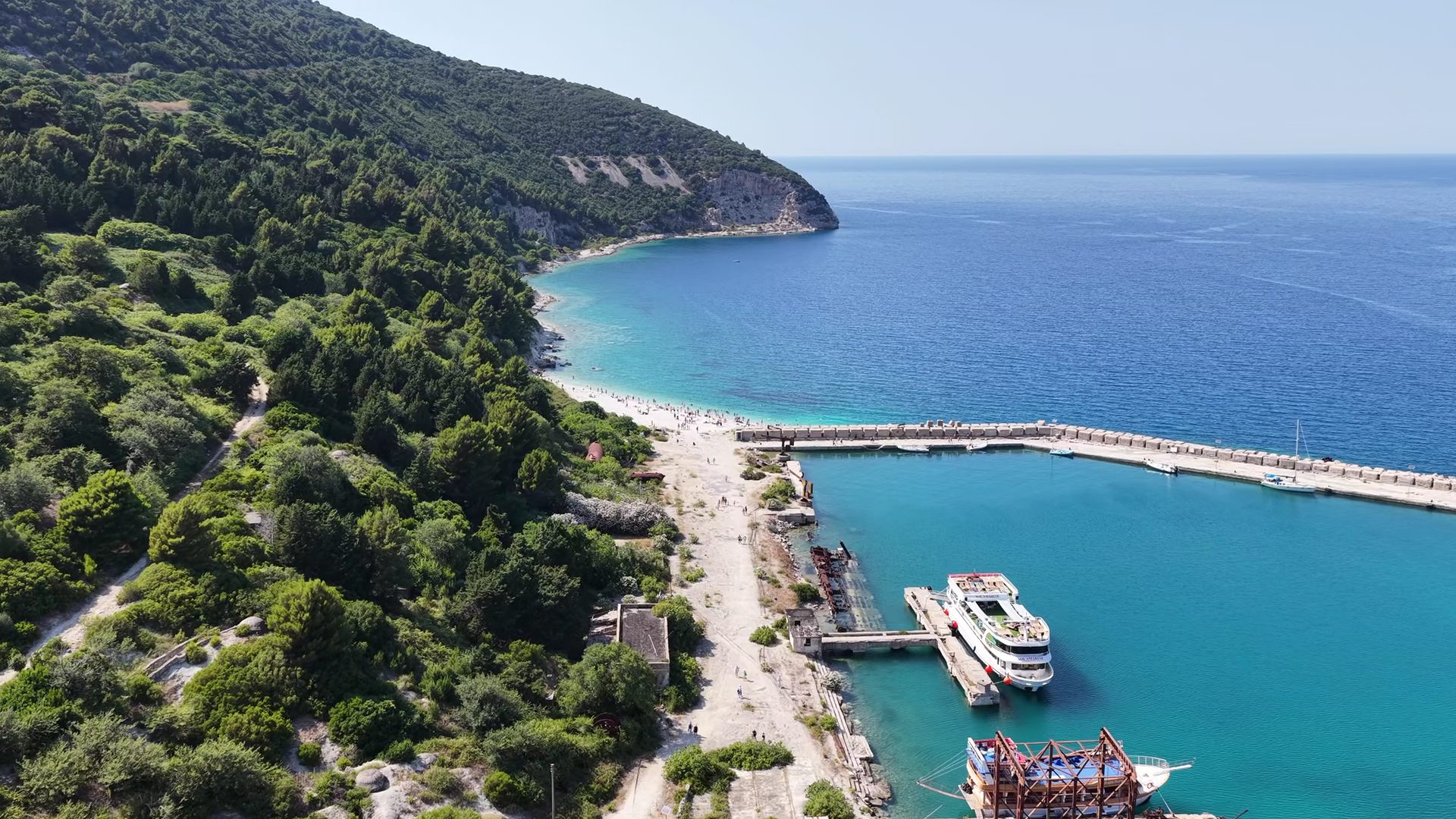
About Vlora
Albania's sea capital — where two seas meet and history runs deeper than the water.
Albania's sea capital — where two seas meet and history runs deeper than the water.
Vlora (Vlorë) is Albania's second city and one of the most strategically important points on the entire Mediterranean — the precise junction where the Adriatic Sea to the north meets the Ionian Sea to the south. For three thousand years, this has been one of the world's most contested and coveted stretches of coastline.
Today it's a city of 120,000 people, blessed with 300 days of sunshine per year, white sand beaches, extraordinary seafood, and direct access to a protected marine park that remains one of Europe's last truly wild coastlines. It is also the birthplace of Albanian independence.
If you're arriving by speedboat, you're arriving the right way.
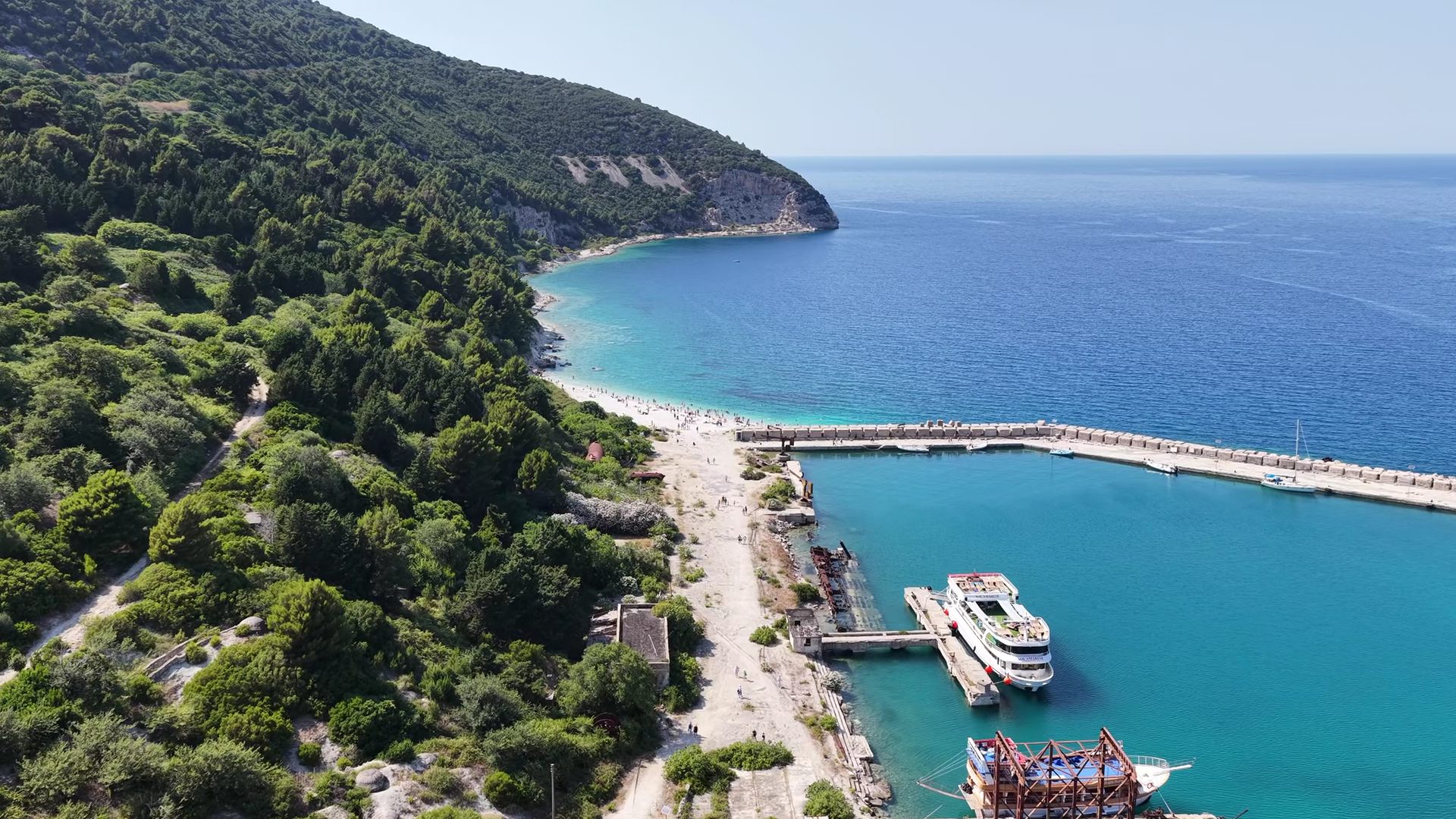
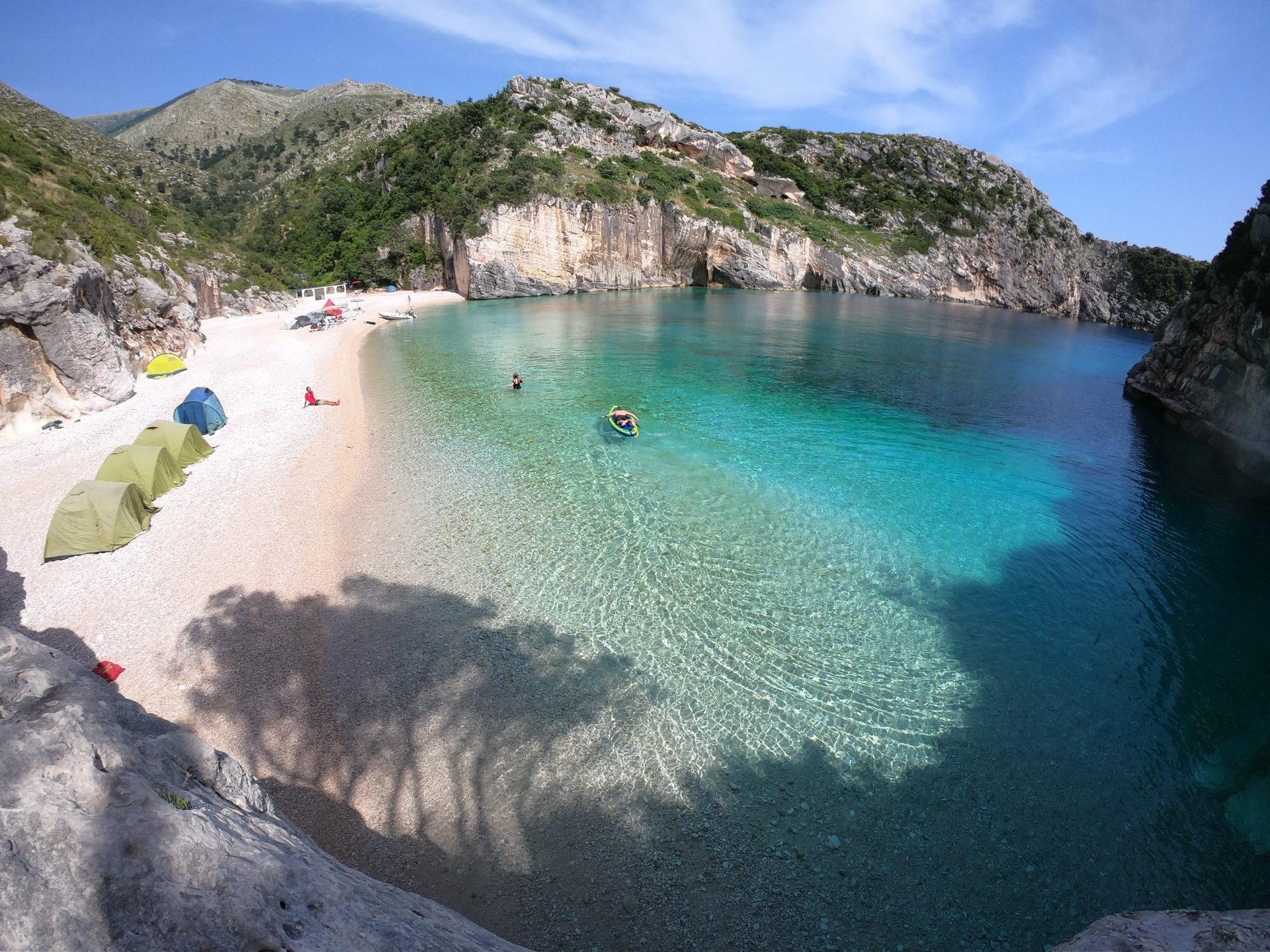
Vlora sits on the eastern shore of Vlora Bay, exactly where the Adriatic and Ionian seas converge. The Karaburun Peninsula juts westward, creating one of the most dramatic natural harbors in the Mediterranean. To the south lies the world-famous Albanian Riviera; to the north, the Myzeqe plain.
A textbook Mediterranean climate: hot, dry summers and mild, wet winters. Vlora receives approximately 300 sunny days per year — one of the highest in all of Europe. Sea temperatures reach 26°C in summer. The tourist season runs from May to October, with July and August being peak months.
Vlora is where Albanian independence was declared in 1912 — the Independence Monument on the seafront promenade is one of the country's most iconic landmarks. The 16th-century Muradie Mosque, built by Mimar Sinan, is a gem of Ottoman architecture. The Ethnographic Museum tells the full story of the city's layered history.
The immediate Vlora area has several excellent beaches: Radhima is a long strip of calm water perfect for families; Orikum has a natural lagoon popular with kitesurfers. A short drive south brings you to Dhermi and Himara — arguably the most beautiful beaches in the entire Balkans, with steep cliffs, crystal water, and minimal development.
Albanian cuisine is a revelation for most visitors: exceptional fresh seafood, grilled meats, incredible dairy (try the kos — thick yoghurt), and extraordinary homemade wines and raki. The Vlora seafront promenade is lined with restaurants and bars. In summer, beach clubs and open-air venues along the riviera stay alive until dawn.
The nearest international airport is Tirana International (TIA) — approximately 2.5 hours by road, with frequent furgon (minibus) services. Direct ferry connections from Brindisi and Bari in Italy make Vlora a perfect first stop on a Balkan road trip. There is no rail connection, but the coastal highway south from Tirana offers spectacular views.
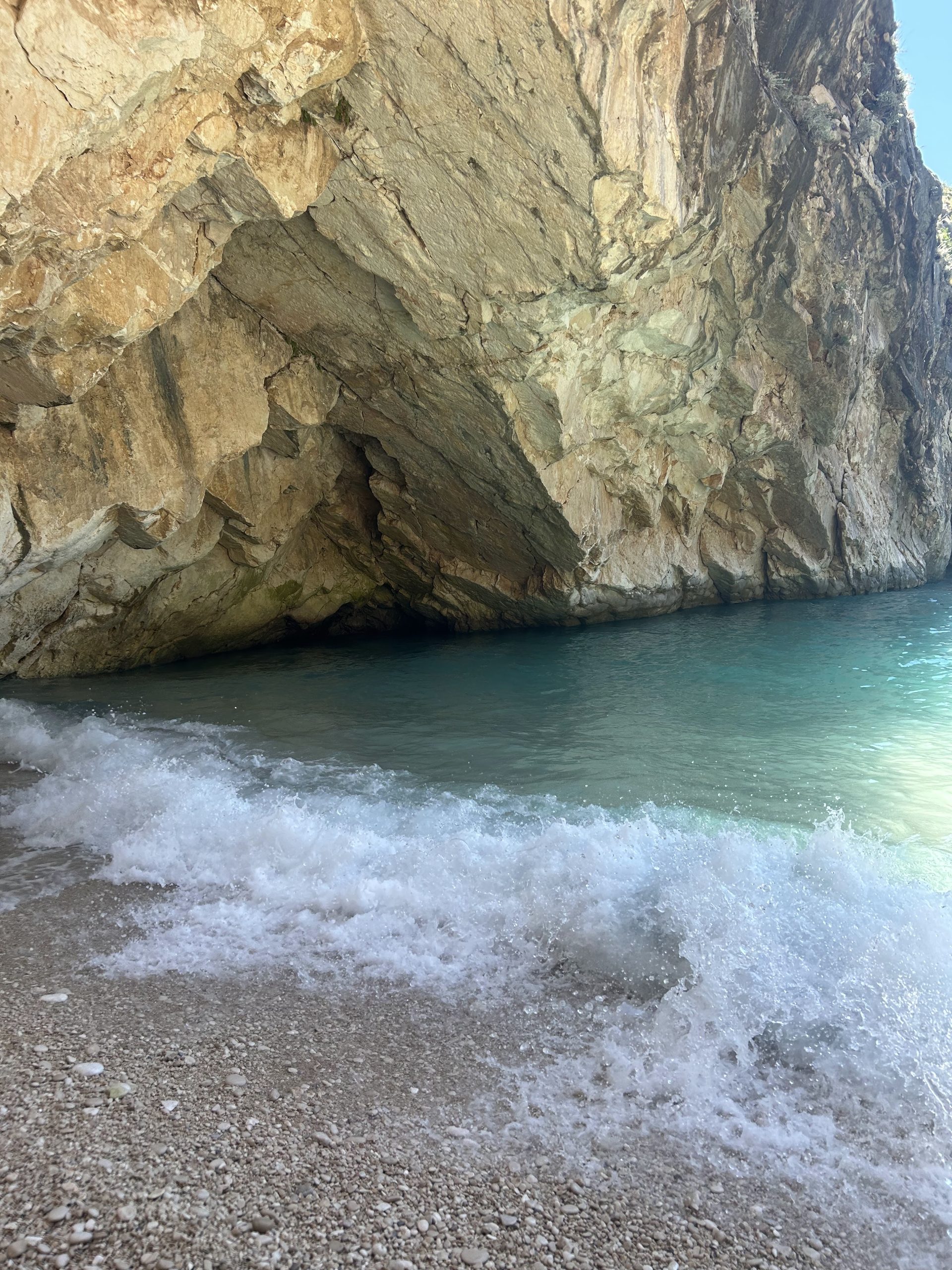
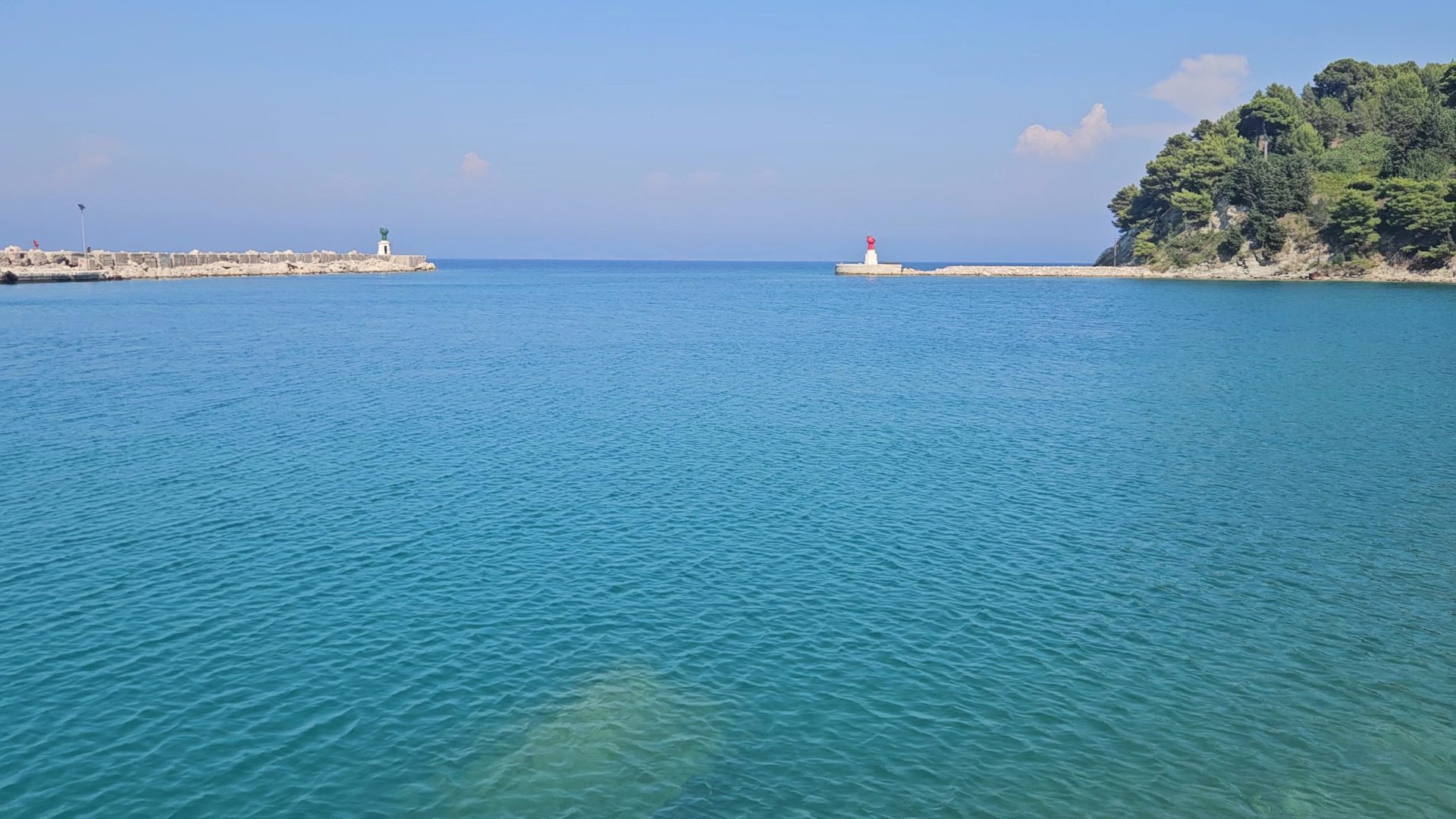
Established in 2010, the Karaburun-Sazan Marine National Park covers 274 km² of protected coastline, underwater canyons, sea caves, and marine ecosystems of extraordinary biodiversity. It is one of the newest and least-visited national marine parks in the Mediterranean.
The park protects endangered sea turtles, monk seals, dolphins, and hundreds of fish species. Its submarine topography — plunging from 0 to over 700 metres within just a few kilometres — creates a rare convergence of warm and cold water ecosystems.
Explore the Park With UsBook a WaveRunners tour and experience Vlora's extraordinary coastline from the water.